
Micro Apartments:
The 2026 Reality Check
Not a compromise. Not a starter home. For millions of Americans priced out of full-size city rentals, micro living is the smartest strategic move between where they are now and where they're going.
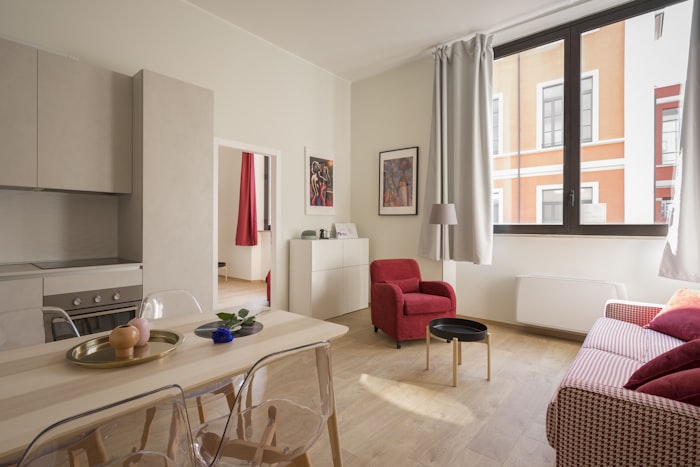
This Is Not a Shoebox — If You Do It Right
Micro apartments are intentionally compact urban units, typically under 441 sq ft, designed around efficiency, location, and walkability rather than raw square footage. They originated as a density solution in 1970s Japan and are now expanding rapidly across U.S. coastal cities and Midwest metros as housing costs spiral.
What competitors won't tell you: a poorly planned micro unit feels like a closet. A well-designed one feels like a deliberate life choice. The difference is entirely in how you approach storage, furniture, light, and boundaries — and we cover all of that here.
The NestPaths angle: Micro living isn't your destination — for most readers, it's a bridge. Lower rent means faster savings for a visa fund, relocation deposit, or down payment. We connect the small apartment to your larger relocation picture.
- Solo renters or couples without children who want prime city locations
- City professionals spending 40%+ of income on a larger apartment
- Students, young professionals, and anyone building savings aggressively
- Downsizing retirees who want urban walkability with low maintenance
- People planning an international move who need a low-overhead base first
- Remote workers who prioritize neighborhood over home office size
- Families or multi-generational households who need separate sleeping spaces
- People who work from home full-time and need a dedicated desk/office zone
- Anyone with significant gear, equipment, or hobby storage needs
- Those sensitive to noise, density, and shared building systems
- Anyone in smaller cities where micro units are rare and may not save money
Know What You're Actually Getting: Size Guide
The term "micro apartment" covers a huge range. A 175 sq ft Berkeley unit and a 440 sq ft Minneapolis micro-unit feel completely different. Here's how to think about size — with 2025 national averages as context.
A micro apartment isn't about having less space — it's about paying for location instead of square footage. You're betting that walkability, transit access, and a great neighborhood deliver more value to your daily life than an extra bedroom in a car-dependent suburb. For many people in high-cost cities, that bet pays off. Price per square foot matters more than total rent. A 300 sq ft micro unit at $1,200/mo is $4/sq ft. A 900 sq ft apartment at $2,800/mo is $3.11/sq ft. The math isn't always in micro's favor — you need to run it for your specific city.
Micro vs. Standard Rent by City — 2026 Data
The savings potential of micro living varies enormously by city. In some markets, you cut your rent nearly in half. In others, the premium location of micro units erases the savings. Here's how key cities compare, using current 2026 data.
| City | Micro Unit Avg Rent | Standard 1BR Avg Rent | Potential Savings | Micro Availability | NestPaths Verdict |
|---|---|---|---|---|---|
| Chicago, IL | ~$1,263/mo | ~$2,420/mo | $1,157/mo | 7% of inventory | Best Value |
| Washington, D.C. | ~$1,400/mo | ~$2,500/mo | ~$1,100/mo | Growing fast | Strong Savings |
| Jersey City, NJ | ~$1,600/mo | ~$2,800/mo | ~$1,200/mo | Rising supply | NYC Access, Lower Cost |
| Seattle, WA | ~$1,450/mo | ~$2,100/mo | ~$650/mo | Highest nationally | Good — Smallest avg units |
| San Francisco, CA | ~$2,200/mo | ~$3,500/mo | ~$1,300/mo | Growing (AI demand) | Expensive but saves vs. standard |
| New York City, NY | ~$2,100/mo | ~$3,800/mo | ~$1,700/mo | Limited (legal min 400 sf) | Big savings, limited supply |
| Minneapolis, MN | ~$900/mo | ~$1,500/mo | ~$600/mo | Strong, growing | Best affordability ratio |
| Nashville, TN | ~$1,100/mo | ~$1,500/mo | ~$400/mo | Limited, rents falling | Marginal savings in 2026 |
Sources: StorageCafe / Yardi Matrix 2025, Zumper National Rent Report Feb 2026, ApartmentAdvisor Feb 2026, Apartment List Feb 2026. Standard 1BR based on national market data. Micro rent estimates based on sub-441 sf inventory where available.
Your Micro Living Savings Calculator
How much could you save by downsizing to a micro unit — and what could those savings fund? Answer 4 questions to find out.
vs. your current apartment
Compare micro apartment savings vs. cost of living in your top relocation destinations
6 Space Strategies That Actually Work
Most micro living guides focus on aesthetics. We focus on function — because a beautiful tiny space that doesn't work for your actual life is just an expensive photoshoot backdrop.
A 5x5 storage unit costs $50–$80/month in most cities. If using one lets you fit in a 350 sf micro unit instead of an 800 sf apartment — and saves you $700/month in rent — that's $620/month net gain. Most micro living guides ignore this math entirely. Seasonal gear, extra furniture, and boxes you open twice a year do not belong in your living space.
Big Constraints — Explained Honestly
Every micro apartment guide covers the Instagram-worthy benefits. Here's what actually trips people up — and how to navigate it before you sign a lease.
Many U.S. cities still have minimum apartment size requirements that effectively ban micro units. New York City only revised its historic 400 sq ft minimum after nearly 20 years of advocacy — and even now, supply is limited. Before you move to a city for a micro unit, check local ordinances.
- Seattle, Portland, Chicago, Minneapolis: Relatively permissive — active micro unit markets
- NYC: Minimum 400 sf for new builds — but older buildings have exceptions
- San Francisco: Active micro development, especially near tech corridors
- Most Southern cities: Minimum size requirements still common — limited inventory
- Always ask a landlord for the actual sq footage measurement, not just the listing description
This is the #1 thing competitors don't cover. In some markets, micro units in premium locations carry higher per-square-foot prices than standard apartments. Smaller doesn't automatically mean cheaper — especially in buildings with amenities, concierge services, or boutique branding.
- Always compare total monthly cost, not just base rent. Add in mandatory fees: valet trash, tech packages, amenity fees, and water billing
- New micro unit buildings often bundle fees that inflate the real monthly cost by $100–$300
- An older studio in the same neighborhood may deliver better value than a new micro unit with premium branding
- In Atlanta and some Sunbelt cities, downsizing to a "micro unit" can actually cost more than a standard apartment in a less-trendy area
Micro unit buildings are high-density by design. Thin walls, shared HVAC, and stacked units amplify noise in ways that larger buildings don't. This is one of the most common sources of lease non-renewal among micro unit renters.
- Ask specifically about building insulation type — concrete construction is significantly quieter than light-frame wood
- Visit the unit at night (6–9pm) before signing — that's when noise from neighbors is most noticeable
- Ask current residents in the hallway: "How's the noise?" People will be honest
- Top-floor units and units away from elevator shafts and laundry rooms are quietest
Storage is the most common post-move complaint from micro unit renters. Not because the unit doesn't have storage — but because most people don't downsize their possessions before moving in. The result: a micro unit jammed with boxes you never unpack.
- Sort possessions into: Daily use, Weekly use, Monthly use, Seasonal, Never. Only daily and weekly items come into the unit
- Off-site storage: 5x5 unit ($50–$80/mo) handles seasonal and monthly items perfectly
- Look for buildings with dedicated storage cages, bike storage, and parcel lockers — these matter more than square footage
- The items you get rid of before moving in are the ones you will not miss. The purge is the point
Micro Living as a Relocation Bridge
This is what makes NestPaths different from every other apartment guide. We see micro living not just as a budget choice — but as a strategic acceleration tool. With shelter costs at 3.6% annual growth and the housing market in its third consecutive year of declining sales, a micro unit may be your most powerful intermediate move toward your final destination.
Redirect rent savings into a relocation fund
Saving $600–$1,200/month in rent adds up to $7,200–$14,400 over 12 months — enough to cover a D7 visa income requirement deposit, a first month + security deposit abroad, or a significant debt payoff that frees your financial profile.
Use the city access to test new markets
A micro unit in a walkable city gives you the urban context to evaluate whether city living is your long-term preference — or whether you're building toward a smaller town, suburban, or international move. Cheap rent buys you time to figure that out without pressure.
Reduce possessions to travel weight
The natural purge of moving into a micro unit makes an international move dramatically easier. People who've lived micro for 1–2 years typically own far less, making the eventual international relocation a move of suitcases — not a shipping container.
Maintain urban professional infrastructure while you plan
You can stay in your city, keep your network, and maintain income continuity — while aggressively cutting housing costs. The micro unit gives you a base without locking in a lifestyle you're already planning to leave.

Your micro unit rent savings could directly fund a Portugal D7 visa income buffer, Mexico Temporary Residency, or Panama pensionado deposit.
→ Explore Visa PathsVan & mobile living goes further on savings but requires more logistics. Compare both paths to find your right fit.
→ See Van & Mobile LivingUse our Budget Calculator to compare micro living in your city vs. cost of living in your top international destinations.
→ Open Budget CalculatorReady to Run the Numbers for Your City?
Whether you're escaping a rent spiral, building savings toward a move abroad, or just want to understand what's actually possible — NestPaths has the tools to help you plan with real data.